Payment Slips
A payment slip hands the recipient exactly the note you just sent, so their wallet finds it immediately instead of scanning the whole pool.
When you send a private transfer to someone else, the recipient's note lives
on-chain inside an encrypted memo only they can open — so normally they have to
Rescan the whole pool to find it. A payment slip skips that: the sender
hands the recipient a short orbslip1:… string, and the recipient rebuilds the
note instantly, without scanning.
A slip carries only data that is already public on-chain — the recipient output's commitment and its encrypted memo — sealed toward the recipient, so an interceptor who copies the slip learns nothing, not even that a payment is coming. It grants no spend power: the recipient still derives their own stealth spending key from their identity, and a forged slip rebuilds nothing because the recomputed commitment must match the chain.
The slip has a documented wire format, and applications can compose one with the public
@orbinum/protocol package — see Payment slips.
Sharing a slip (sender)
Right after a private transfer to another user confirms, the app raises a payment slip dialog so you can capture it immediately and send it to the recipient (chat, email, anywhere).
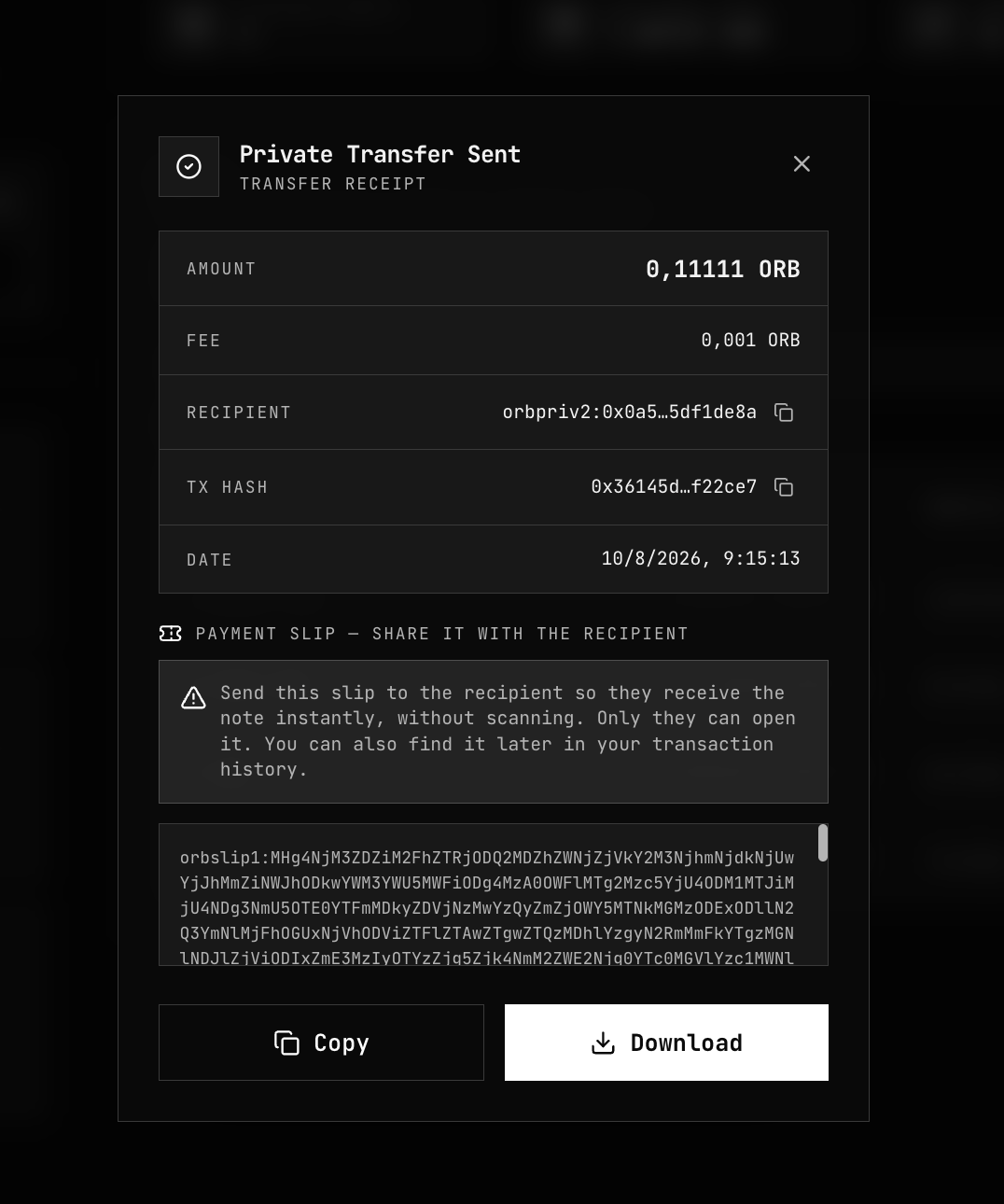
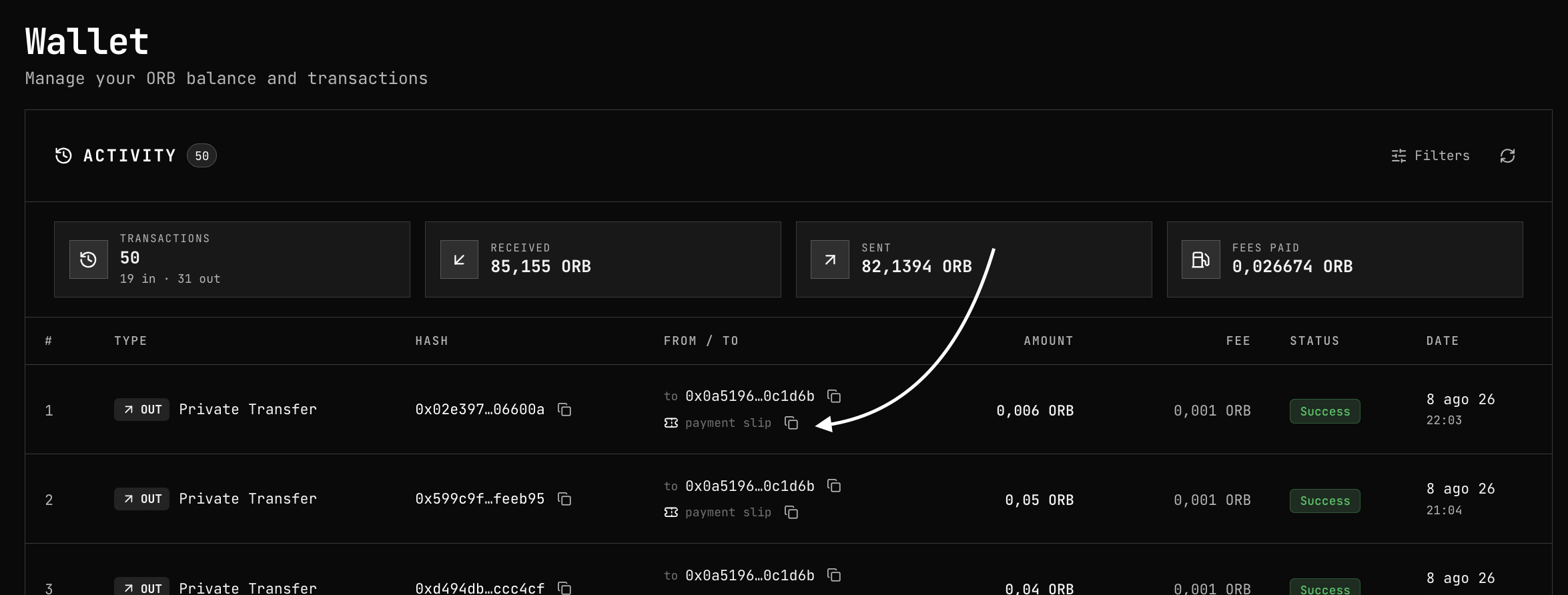
The slip is also kept with that transaction, so you can re-share it later: find the private transfer in the transaction table and copy its slip from the row.
Importing a slip (recipient)
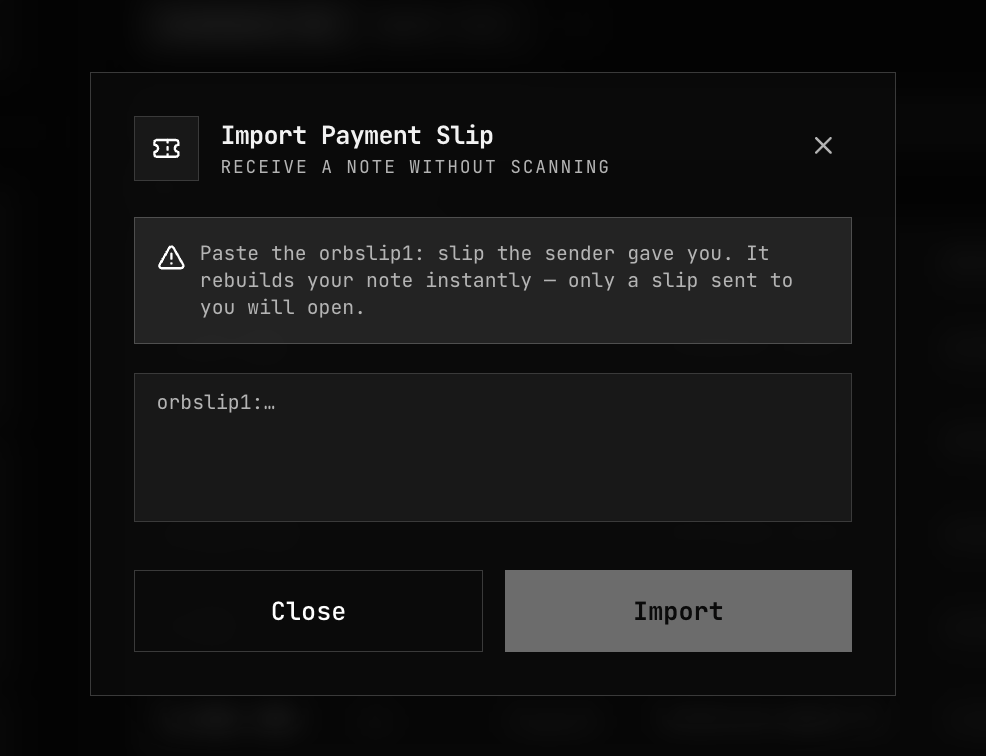
Open Private Vault → Import Slip, paste the orbslip1:… string, and import.
The app opens the slip with your keys, rebuilds the note, and marks it available —
no chain scan. A slip that is not yours (it does not decrypt) imports nothing.
A payment slip recovers one note the moment it is sent — the recipient never has to scan. A note backup is your own whole-vault export for moving between your devices. Rescan is the always-works fallback from the chain. A slip carries only public data and no spending key, exactly like a backup.